Why is cemetery community engagement so important?
Cemetery community engagement is vital because it transforms your grounds from a passive place of memory into an active, cherished community asset. By involving local residents in the story and care of your cemetery, you build a network of advocates, volunteers, and future supporters who have a personal stake in its preservation. This engagement fosters a sense of shared ownership, ensures the cemetery’s history is passed down, and provides a valuable source of support for maintenance and restoration projects that might otherwise be financially out of reach.
A strong community connection also helps demystify cemetery operations. When people understand the work that goes into maintaining the grounds and preserving its history, they are more likely to respect the space, follow rules, and even contribute financially. This relationship is a long-term investment in your cemetery’s stability and its place in the heart of your community.
How to Start a Volunteer Monument Preservation Program
To start a volunteer monument preservation program, begin by creating a clear, structured plan that defines the scope of work, establishes safety protocols, and sets realistic goals. Your program should focus on basic, non-invasive cleaning and documentation, leaving complex repairs to professionals. Success depends on providing volunteers with clear guidance, proper tools, and a meaningful experience that connects them to local history.

Follow these steps to build a safe and effective program:
Step 1: Define the Scope and Create Guidelines
First, decide what tasks are appropriate for volunteers. This typically includes gentle cleaning of stable monuments, clearing debris, and documenting inscriptions and conditions. Create a written set of guidelines that explicitly lists approved cleaning methods and products—and, just as importantly, what is forbidden. Prohibit the use of wire brushes, power washers, bleach, and household cleaners, as these can cause irreversible damage to historic stone. Your guidelines are your primary tool for protecting both the monuments and your cemetery’s liability.
Step 2: Recruit and Screen Volunteers
Reach out to local historical societies, genealogical groups, schools, and community service organizations. Use your cemetery’s website and social media channels to announce the program. Create a simple application form to gather contact information and understand why individuals are interested. While the work is not strenuous, it’s wise to include a waiver of liability and a brief orientation to ensure everyone understands the physical demands and safety rules. This process helps you find dedicated individuals who will respect the grounds and the task.
Step 3: Host a Mandatory Training Day
Never let a volunteer touch a monument without hands-on training. Schedule a mandatory training session led by an experienced staff member or a hired professional conservator. Demonstrate the proper techniques for wetting, cleaning, and rinsing a monument. Explain the different types of stone and why they require different approaches. Provide each volunteer with a pre-approved cleaning kit (soft brushes, plastic scrapers, water sprayers) to prevent them from bringing inappropriate tools from home.
Step 4: Supervise and Document the Work
A staff member must always supervise volunteer events. Their role is to answer questions, correct improper techniques, and ensure everyone stays safe. It's also an opportunity to share stories about the people buried in the cemetery, making the work more meaningful for volunteers. Use the event to document conditions. You can have volunteers take photos of monuments before and after cleaning or fill out simple condition assessment forms. This data provides a valuable baseline for future conservation efforts and can be managed within a robust cemetery records management system.
Creating Educational Events and Tours
Educational events and tours are powerful tools for cemetery community engagement, turning your grounds into a living classroom and historical archive. These programs reframe the cemetery as a place of discovery, attracting visitors who might not otherwise have a reason to stop by. By sharing the stories of the people interred within and the history of the monuments themselves, you cultivate a deeper public appreciation for your cemetery's role in the community's heritage.
Start with simple, accessible formats. A guided historical walking tour is a classic for a reason: it requires minimal resources but offers high value. Choose a theme—such as founding families, military veterans, or unique monument symbolism—and map out a route. Develop a script that is both informative and engaging, and train staff or knowledgeable volunteers to lead the tours. Promote these events through local media, community calendars, and your own online channels.
Beyond standard tours, consider workshops that teach specific skills. A class on deciphering old headstone iconography or a seminar on genealogical research using cemetery records can attract a dedicated audience. Partnering with a local stone carver for a monument design demonstration or a historian for a lecture series can also draw new visitors. These events position your cemetery as an educational authority and a hub for local history.
Remember to establish clear etiquette for event attendees. Remind visitors that they are in a sacred space. Rules about staying on paths, not touching fragile monuments, and maintaining a respectful volume help ensure that these events can coexist peacefully with the cemetery's primary purpose of remembrance.
Developing a Clear Monument Etiquette Policy
A clear monument etiquette policy is a non-negotiable part of protecting your cemetery and managing public interaction. This policy should be a publicly accessible document that outlines what visitors and families can and cannot do regarding monument cleaning, decoration, and repair. It serves as a crucial educational tool that preemptively answers questions, prevents well-intentioned damage, and gives your staff a firm, consistent basis for enforcement.
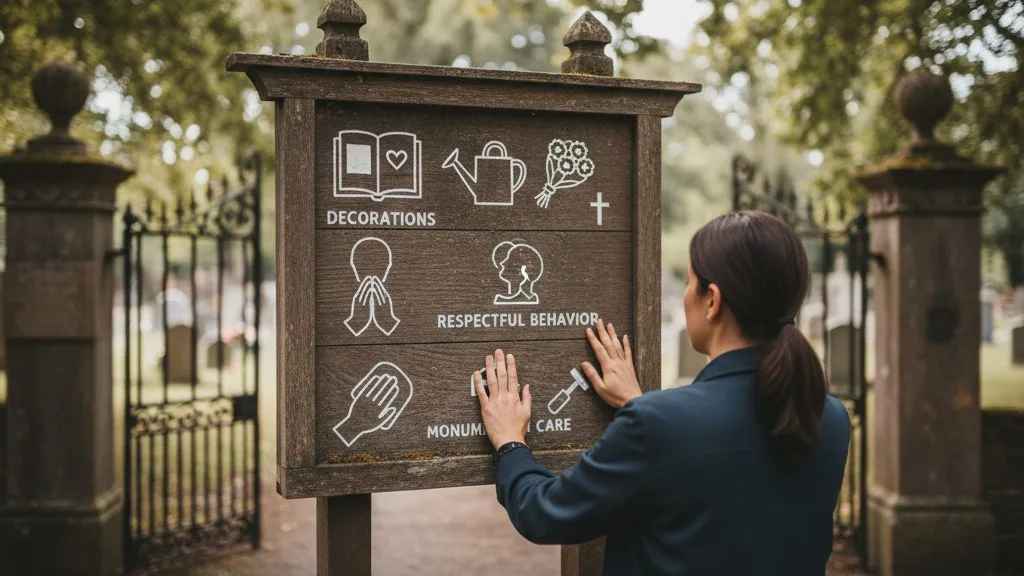
Your policy should be written in plain, direct language. Avoid jargon where possible. It should cover several key areas:
- Cleaning: State explicitly that families or visitors must seek permission before cleaning any monument. List approved methods and materials (e.g., water and soft, natural-bristle brushes) and strictly prohibit damaging items like wire brushes, power washers, and harsh chemicals. Explain why these are prohibited—because they can permanently etch, stain, or abrade the stone.
- Decorations: Define rules for placing flowers and other tributes. Specify what is allowed (e.g., fresh-cut flowers, approved wreath stands) and what is not (e.g., glass containers, wires attached to monuments, items that can stain the stone). Include a schedule for when decorations will be removed by grounds staff, such as a week after a holiday. This manages expectations and keeps the grounds tidy.
- Repairs: Make it absolutely clear that all monument repairs must be performed by approved, insured professionals. Families should never attempt to repair a leaning, broken, or fallen monument themselves. The risk of injury or further damage is too high. Provide a clear process for reporting a damaged monument to the cemetery office.
Post this policy on your website, include it in welcome packets for new lot owners, and have copies available in the office. Signage at cemetery entrances summarizing key points can also be effective. A clear policy, consistently applied, is the foundation of effective monument preservation and protects the cemetery from liability and the monuments from harm.
Using Technology to Support Engagement and Preservation
Technology can significantly enhance your cemetery community engagement and preservation efforts by making information more accessible and your operations more efficient. Modern software and online platforms allow you to share your cemetery’s stories with a global audience, organize volunteers, and meticulously track the condition of every monument. By adopting the right tools, you can free up staff time from administrative burdens to focus on what matters most: connecting with your community.
One of the most impactful uses of technology is creating a digital, searchable map of your cemetery. When this map is linked to your burial records, it becomes a powerful tool for families, genealogists, and historians. They can locate a specific grave from their computer or phone, often with a photo of the monument and biographical information. This self-service access not only helps families but also reduces the number of simple lookup requests your office staff handles. Sunset’s public-facing pages, for instance, allow cemeteries to publish memorial and space information for families to browse online.
Cemetery management software also provides a structured way to support preservation work. Staff and trained volunteers can use tablets in the field to document a monument’s condition, upload photos of damage, and note when cleaning or repairs are completed. This information creates a permanent digital log for each monument, replacing scattered notes or unreliable memories. With Sunset, you could create a custom form or checklist to standardize these condition assessments, ensuring every inspection captures the same crucial data. This detailed record-keeping is essential for planning long-term conservation projects and for demonstrating the need for funding or grants.
Frequently asked questions
How do we handle people who want to clean their family’s headstone?
You should create a clear, proactive policy for this. Require anyone wanting to clean a headstone to contact the office first. Provide them with a one-page guide on safe cleaning methods and approved materials. Consider offering to loan them a