Effective cemetery records management is the foundation of an orderly, solvent, and reputable cemetery. It involves creating a systematic approach to how you create, store, access, and secure all information related to interments, property ownership, and operations. Without a reliable system, your staff wastes time searching for information, risks making costly errors, and struggles to provide families with the quick, compassionate service they deserve.
This guide provides a practical framework for organizing your cemetery's records. We will walk through the common challenges cemeteries face, a step-by-step process for improving your system, and the benefits of moving to a modern, centralized platform.
What Is Cemetery Records Management?
Cemetery records management is the formal practice of overseeing all the data your cemetery produces and maintains. It goes beyond simply filing away papers; it is a comprehensive system for ensuring your records are accurate, accessible, secure, and preserved for the long term. A complete records management system encompasses every piece of information that defines your cemetery's past, present, and future obligations.
This includes several distinct but interconnected types of records:
- Interment Records: The core data about who is buried where. This includes the decedent's full name, dates of birth and death, the date of interment, and the precise location (section, lot, and space).
- Ownership Records: The legal documentation of who owns the rights of interment for each plot. This includes deeds, contracts, transfer documents, and a clear history of ownership changes over time.
- Financial Records: Invoices, payment histories, perpetual care contributions, and contracts for pre-need sales. These records are vital for your cemetery's financial health and compliance.
- Mapping and Inventory Records: The physical maps of your grounds and the corresponding inventory data that shows which spaces are sold, available, or reserved.
- Operational Records: Work orders for openings and closings, monument setting permits, and maintenance logs.
The goal of cemetery records management is to unite these disparate pieces of information into a single, reliable source of truth. When your team can access complete and accurate information instantly, they can operate with confidence and serve families effectively.
Why Is Organizing Cemetery Records So Challenging?
Organizing cemetery records is uniquely difficult due to the long-term nature of the work, the variety of data types, and the legacy of historical practices. Many cemeteries struggle with systems that are a patchwork of paper, spreadsheets, and outdated software, each with its own significant drawbacks. Understanding these challenges is the first step toward building a better system.

The Problem of Paper Records
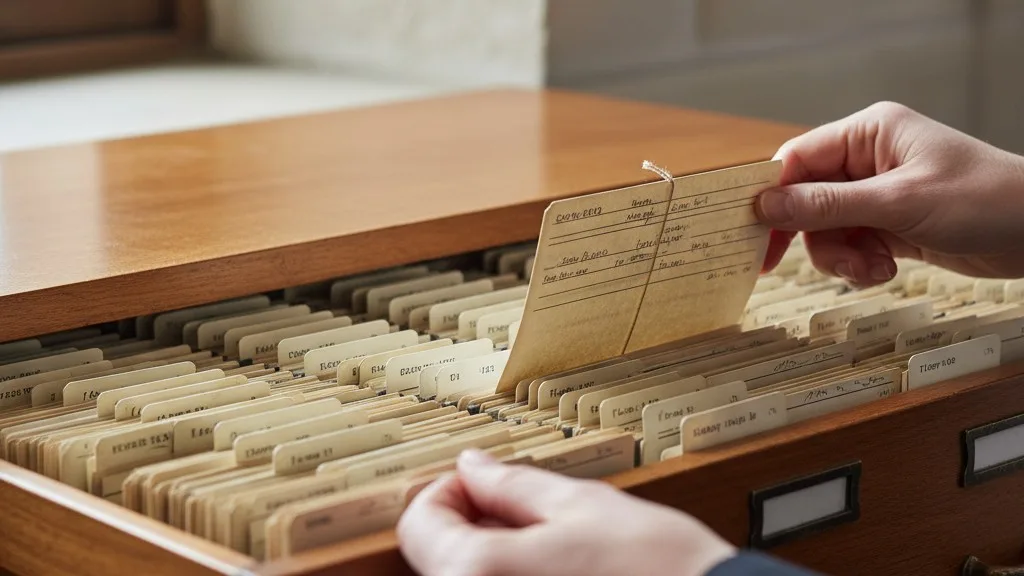
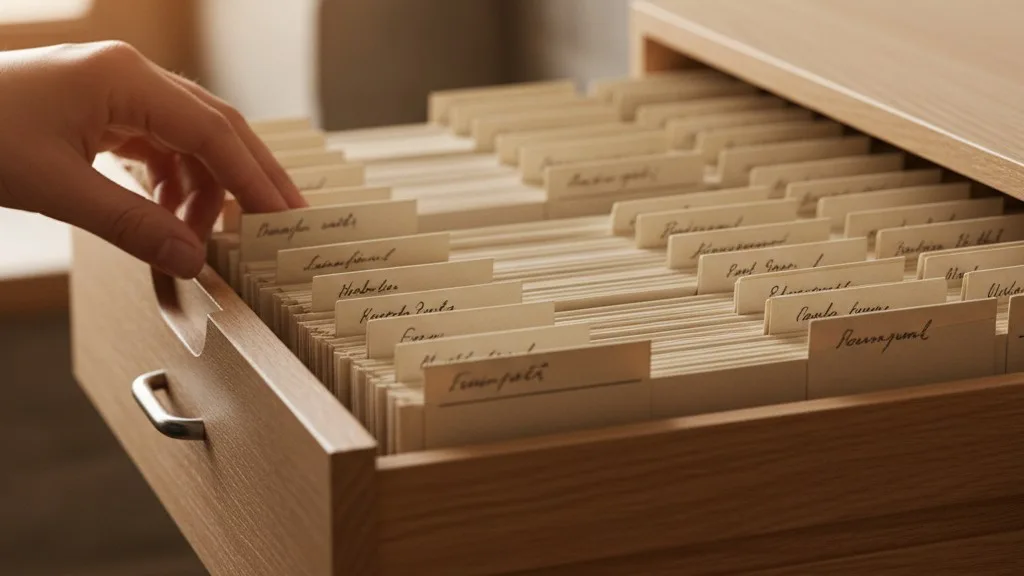
Paper records, such as lot cards, handwritten ledgers, and physical maps, have been the standard for centuries, but they present serious risks. They are vulnerable to physical damage from fire, floods, and simple aging. A single disaster can wipe out your cemetery's entire history. Paper records are also inefficient; finding a single piece of information can require manually searching through multiple binders or file cabinets, a time-consuming process that frustrates both staff and families. Furthermore, paper creates a single point of failure. If a ledger is misplaced or a map is taken out of the office, the information is unavailable to anyone else, leading to operational delays and potential errors.
The Limits of Spreadsheets
Many cemeteries have moved from paper to spreadsheets, seeing them as a low-cost digital solution. While spreadsheets are more searchable than paper, they introduce a new set of problems. They lack robust data validation, making it easy for staff to introduce typos, use inconsistent date formats, or accidentally delete critical information. Spreadsheets also suffer from version control issues. When multiple staff members have their own copies of a master file, it becomes nearly impossible to know which version is the most current, leading to double-selling plots or relying on outdated ownership information. Because spreadsheets are not designed for the complex relationships in cemetery data, they cannot easily link a person's ownership record to their eventual interment record or connect a payment to a specific pre-need contract.
Historical Inconsistencies and Missing Data
Cemeteries that have been in operation for decades or centuries often inherit records with significant inconsistencies. Over the years, different sextons and clerks used different methods for recording information. Handwriting can be difficult to decipher, and terminology for sections and plots may have changed over time. It is common to find gaps in the records, such as missing interment dates or unclear ownership transfers. A systematic cemetery records audit is often the only way to uncover and begin correcting these historical discrepancies, which can otherwise lead to serious legal and operational problems.
Staff Turnover and Lost Knowledge
Much of a cemetery's operational knowledge resides with its long-tenured staff. When an experienced office manager or superintendent retires, they often take with them an unwritten understanding of the grounds and the history of certain family plots. If your records system relies on one person's memory to function, it is not a system at all—it is a major liability. A well-organized, centralized records system captures this institutional knowledge, ensuring that operations can continue smoothly regardless of staff changes. It makes training new employees easier and ensures that every member of the team has access to the same reliable information.
A Step-by-Step Guide to Organizing Your Cemetery Records
Improving your cemetery records management is a significant project, but it can be broken down into a series of manageable steps. The goal is to move from a fragmented, unreliable collection of files to a single, authoritative system that your entire team can trust. This process requires a methodical approach to ensure accuracy and completeness.

Step 1: Conduct a Comprehensive Records Audit
The first step is to understand exactly what you have. A records audit involves systematically reviewing all of your existing records—paper, spreadsheets, and any other formats—to identify inconsistencies, errors, and gaps. You will be cross-referencing interment records with ownership cards, comparing lot cards to your master map, and flagging any conflicting information. For example, does the name on the deed match the name on the lot card? Does the interment date in the ledger align with the burial permit? This process will create a list of issues that need to be resolved and forms the basis for building a clean, reliable dataset.
Step 2: Standardize Your Data and Naming Conventions
Before you can consolidate your records, you must establish a consistent format for your data. Inconsistent data is a primary cause of search failures and reporting errors. Define a single, official way to record key information. For example, decide on a standard date format (e.g., MM/DD/YYYY), a consistent way to write names (e.g., Last, First Middle), and a clear, unambiguous naming convention for your burial locations. A logical location hierarchy, such as Cemetery > Section > Lot > Space, makes every plot easy to identify and prevents confusion between similarly numbered plots in different sections. Document these standards and ensure everyone on your team follows them for all new entries.
Step 3: Choose a Central System of Record
With your data audited and your standards defined, the next step is to choose a single platform to serve as your official system of record. Relying on a mix of paper and spreadsheets is unsustainable. The most effective solution is modern, cloud-based cemetery management software. Unlike disconnected spreadsheets, dedicated software is built to handle the specific needs of a cemetery. It connects interment records to ownership history, links payments to contracts, and integrates everything with a digital map. A centralized system ensures that when a record is updated in one place, it is updated for everyone instantly. This eliminates the confusion of multiple file versions and provides a single source of truth for your entire operation.
Step 4: Digitize and Consolidate Your Records
This is the most labor-intensive, but also the most transformative, step. It involves migrating all of your historical information from paper and spreadsheets into your new central system. This process typically includes scanning physical documents like deeds and historical ledgers and performing careful data entry to populate the database. It is crucial to approach this with a focus on accuracy. For more information on this process, see our guide on how to digitize historical cemetery records. While time-consuming, the result is a complete, searchable digital archive of your cemetery's history, accessible in seconds and protected from physical loss.
Step 5: Integrate Your Map with Your Records
A static map, whether on paper or in a simple image file, is a separate document that must be manually cross-referenced with your other records. A modern cemetery records management system allows you to create a dynamic digital map that is directly linked to your database. Clicking on a plot on the map can instantly bring up its ownership status, interment history, and available spaces. This visual approach to inventory management makes it easy to find available plots for families, guide grounds crews to the correct location, and understand your remaining capacity at a glance.
Step 6: Train Your Staff and Document Workflows
A new system is only effective if your team uses it correctly and consistently. Provide thorough training for all staff members, from the office to the grounds crew, on how to use the new system for their daily tasks. Document your new workflows, such as how to process a sale, record an interment, or handle an ownership transfer within the software. This ensures that everyone follows the same procedures, maintaining the integrity of your data and ensuring the long-term success of your new, organized system.
The Benefits of an Organized Record System
Investing the time and resources to properly organize your cemetery records yields significant returns across your entire operation. The benefits extend far beyond a tidier office. An organized system improves operational efficiency by drastically reducing the time staff spend searching for information. Instead of digging through file cabinets, they can answer a family's question in seconds. This speed and accuracy also reduce the risk of costly mistakes, such as selling the same plot twice or digging in the wrong location, which can have serious financial and reputational consequences.
Furthermore, a well-managed digital system enhances security and ensures the long-term preservation of your cemetery's vital history. Cloud-based software protects your records from physical disasters like fires or floods and secures them against unauthorized access. Most importantly, it empowers your staff to provide a higher level of service. With reliable information at their fingertips, they can focus their attention on supporting grieving families with compassion and professionalism, which is the core of your mission.
Frequently Asked Questions
What is the best way to back up cemetery records?
The best way to back up cemetery records is to use a cloud-based cemetery management software. These systems automatically back up your data to secure, geographically distributed servers, protecting it from local disasters like fire, flood, or hardware failure. If you still use paper or local spreadsheets, you should maintain digital scans and copies stored off-site, but this manual process is less reliable than an automated cloud solution.
How do I handle conflicting information in old records?
When you find conflicting information, flag the discrepancy and gather all related documents (deeds, lot cards, ledgers, burial permits). Prioritize legal documents like deeds for ownership questions. Sometimes you may need to consult historical plat maps or even probate records. Document your findings, the sources you used, and the reason for your final decision. In a modern software system, you can often add notes to the record to explain the correction for future reference.
How much does it cost to digitize cemetery records?
The cost to digitize cemetery records varies widely based on the number of records, their condition, and whether you handle the project in-house or hire a third-party service. In-house digitization requires significant staff time for scanning and data entry. Professional services charge per record or per image, which can be a larger upfront investment but is often faster and more accurate. The cost of not digitizing—in terms of risk, inefficiency, and potential errors—is often far greater over the long term.
How can software help with cemetery records management?
Cemetery management software helps by providing a single, centralized database for all your records. It replaces scattered paper files and error-prone spreadsheets. Features like integrated digital mapping, standardized data entry forms, and automated reporting streamline workflows, reduce errors, and make information instantly accessible to your entire team. This allows you to manage sales, interments, ownership, and financials in one place.
Take Control of Your Cemetery's Records
Organizing your cemetery records is not just an administrative cleanup project; it is a fundamental investment in the stability, efficiency, and future of your cemetery. By moving from fragmented paper and spreadsheets to a unified, digital system, you protect your legacy, reduce operational risk, and free your staff to focus on what matters most: serving families with care and precision.
Sunset was built by cemetery people to solve these exact challenges. Our software provides a single source of truth for your maps, spaces, ownership, and interments, all in one secure, easy-to-use system. If you are ready to see how a modern platform can transform your records management, we invite you to book a conversation with our team.