Making cemetery information easier for families to access means creating clear, simple pathways for them to find burial locations, learn about their ancestors, and understand their ownership rights. For most cemeteries, this involves organizing internal records into a single source of truth and then deciding which information to share publicly and how to share it securely and respectfully.
Families today expect to find information online, whether they are planning a visit from out of state or are deep into genealogical research. When they can't find what they need, they call your office, which takes up valuable staff time. By proactively providing access to key information, you not only serve families better but also reduce the administrative burden on your team.
Why Should Cemeteries Prioritize Family Access to Information?
Cemeteries should prioritize family access to information because it builds trust, enhances the family experience, and improves operational efficiency. When families can easily find answers to their questions, they feel more connected to the cemetery and confident in its management. This positive experience is crucial, as a cemetery is not just a place of business but a community institution holding deep personal meaning for countless individuals.
Historically, cemetery records were kept on paper cards, in ledgers, or on physical maps stored in the office. Access was limited to those who could visit or call during office hours. This created barriers for families, especially for younger generations or those living far away. In a digital world, these limitations can be perceived as a lack of transparency or care. Providing better access demonstrates a commitment to service that aligns with modern expectations.
Furthermore, making information accessible internally is the first step toward making it accessible externally. When your own staff can't quickly find a burial record or confirm plot ownership, they can't provide the swift, compassionate service families deserve. Centralizing your data helps your team first, which in turn allows them to help families better. This focus on internal efficiency is a core part of improving the overall family experience.
What Information Do Families Typically Need?
Families typically need three main categories of information: logistical details for visiting, historical data for genealogy or remembrance, and administrative records related to ownership. Understanding these needs helps you organize your information and decide what to make available.
Logistical Information
This is the most common category of inquiry, especially for first-time visitors or those planning a service. It includes:
- Burial Location: The exact location of a specific grave, niche, or crypt (e.g., Section, Lot, Space). This is the single most requested piece of information.
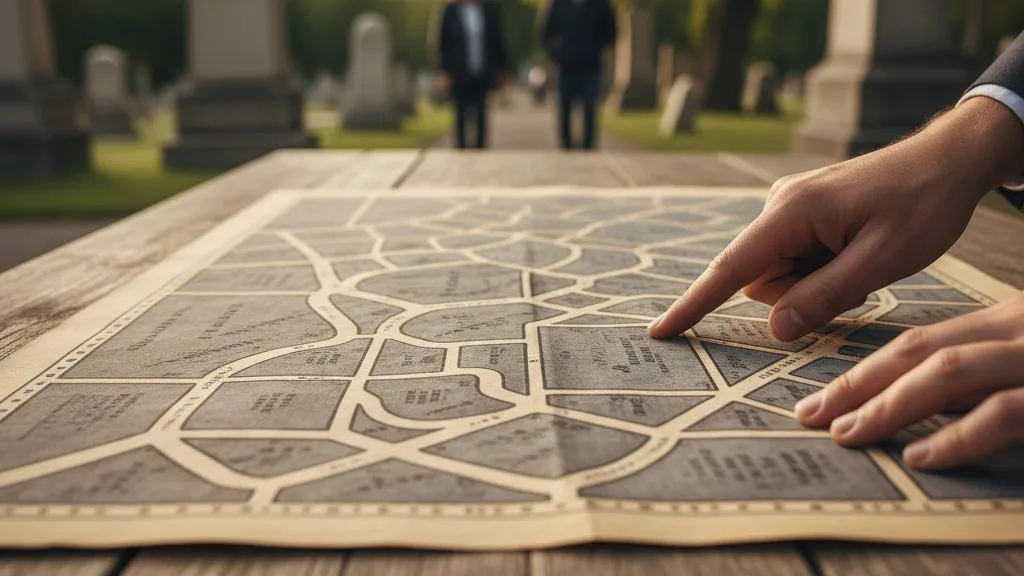
- Cemetery Maps: A general map of the grounds showing sections, roads, and key landmarks like the office or restrooms.
- Hours of Operation: Gate hours for visitation and office hours for administrative needs.
- Rules and Regulations: Guidelines on decorations, planting, and seasonal cleanups.
Genealogical and Historical Information
Many people turn to cemeteries as a primary source for family history research. They are looking for more than just a location; they are seeking a story. This information includes:
- Full Name of the Deceased: Including maiden names where available.
- Dates of Birth and Death: Essential for building family trees.
- Interment Date: The date the burial took place.
- Relationships: Connections to others buried in the same plot or nearby, if known.
- Veteran Status: Information about military service is highly valued by researchers and descendants.
Ownership and Administrative Information
Lot owners and their descendants need access to records that confirm their rights and responsibilities. These inquiries are often sensitive and require careful handling. They include:
- Deeds and Contracts: Proof of ownership and the terms of the original purchase.
- Interment Rights: Who is designated to be buried in the purchased spaces.
- Transfer History: A record of how ownership has passed through generations.
- Available Spaces: Information on whether other spaces are available in the family plot.
Meeting these diverse needs begins with a well-organized, centralized record-keeping system. If your data is scattered across paper ledgers, spreadsheets, and different software, you'll struggle to provide consistent answers. A cemetery records audit is often the first step toward building this reliable foundation.
How Can You Provide Access to Cemetery Information?
You can provide access to cemetery information through a combination of in-office support, online tools, and physical signage on the grounds. The best approach is a layered one that meets families where they are, whether they are standing in front of your office or browsing on their phone from hundreds of miles away.
Step 1: Centralize Your Records Internally
Before you can share information, you must trust it. The first and most critical step is to consolidate all your records—paper, spreadsheet, and old software—into a single, reliable system. This process often involves a thorough records audit to identify and correct discrepancies. A modern, cloud-based cemetery management software is designed for this purpose, providing a central hub for all your operational data.
In Sunset, for example, all information about spaces, ownership, interments, and finances is connected. When a staff member looks up a person, they see their ownership records and their interment record in one place, eliminating the need to cross-reference multiple systems. This ensures your team provides fast, accurate answers to families who call or visit.
Step 2: Enhance In-Office and Phone Support
With centralized records, your front-office staff become powerful resources for families. Instead of spending ten minutes searching for a dusty ledger, they can answer a question in seconds. Train your team to not only provide the requested information but also to anticipate related questions. If a family member asks for a grave location, your staff can also offer to print a small map with the location marked, or mention the gate hours.
Step 3: Create a Public-Facing Online Portal
A public-facing online portal or search function on your cemetery's website is the most effective way to provide cemetery information for families at scale. This allows people to self-serve, answering their own questions anytime, day or night. This significantly reduces routine phone calls to your office.
You have control over what information is shared. A good starting point includes:
- A searchable database of interments: Allow searches by last name to find burial locations. You can choose to display only the name, date of death, and location, withholding more sensitive data.
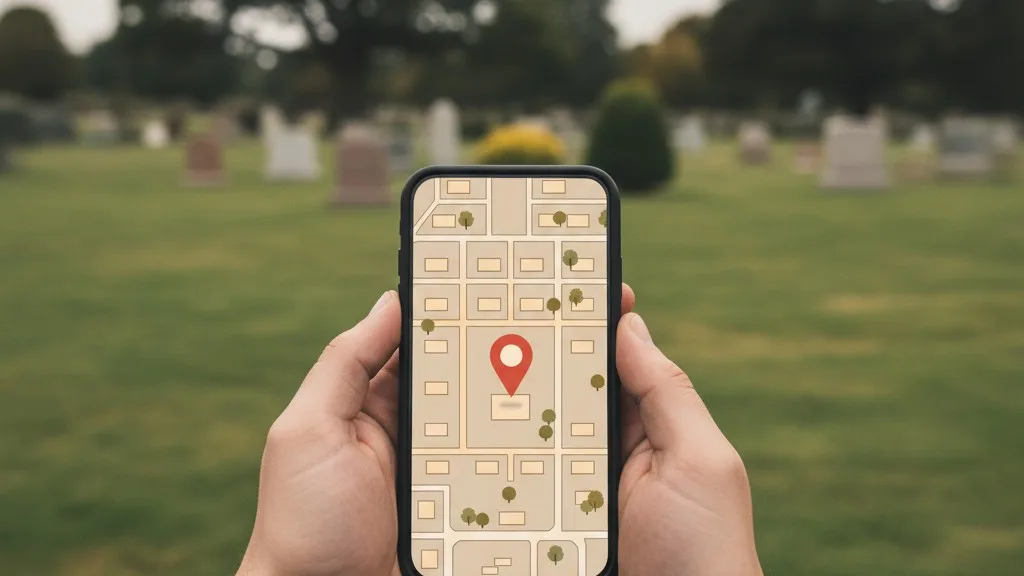
- An interactive map: Connect your search results to a digital map that shows the location of the grave on the grounds.
- General information pages: Post your hours, rules, and a downloadable map of the cemetery.
Platforms like Sunset offer optional public memorial pages that can be enabled by the cemetery. This feature allows you to publish interment information and even maps directly from your management software, ensuring the public data is always in sync with your master records without any extra work.
Step 4: Improve On-Site Wayfinding
Do not forget the physical experience of visiting the cemetery. Clear, visible signage is essential. Ensure section markers are easy to read from the road. Consider adding a large map board near the main entrance. For cemeteries with the resources, QR codes placed on section markers or a central kiosk can link visitors directly to the online map on their smartphones, bridging the gap between your digital and physical spaces.
Managing Privacy and Security
Managing privacy and security is paramount when making cemetery information public. While the fact of a person's death and their burial location are generally considered public record, you must handle the data with respect and care. Always consult with legal counsel to understand specific state and local regulations regarding data privacy.
Here are some best practices:
- Share a Limited Data Set: For public searches, only display essential information like the decedent's name, date of death, and burial location. Do not publish cause of death, the names of living relatives, or detailed contract information.
- Protect Living People: Never publish information about living lot owners. Ownership details should only be accessible to authorized staff and discussed directly with the owners or their legal heirs.
- Use a Secure Platform: If you are using software to publish information, ensure it is from a reputable provider with strong security protocols. Cloud-based systems should protect your data with encryption and secure access controls.
- Create a Clear Policy: Develop and post a privacy policy that explains what information you collect, what you share publicly, and why. This transparency builds trust with families.
The goal is to be helpful, not invasive. By being thoughtful about what you share, you can provide a valuable service while protecting sensitive information and respecting the privacy of the families you serve.
Frequently Asked Questions
What if our records are a mess? Where do we start?
If your records are disorganized, start with a single section of your cemetery. Conduct a full audit of that section, comparing your paper records, digital files, and the physical headstones. This smaller, manageable project will help you develop a process and understand the scope of the work before tackling the entire cemetery. This is also the perfect time to evaluate modern software, as it can be the target system for your newly audited data.
Do we need a whole new website to offer online record search?
Not necessarily. Many cemetery management software solutions, including Sunset, can provide a simple, embeddable search widget that you can add to your existing website. This gives you the power of a searchable database without the cost and complexity of a full website redesign.
How do we handle requests to remove information from our public search?
You should have a clear, written policy for handling these requests. Generally, if the request comes from a direct family member and concerns information that is not legally required to be public, it is good practice to honor it. Consult with legal counsel to formulate a policy that is compassionate, consistent, and compliant with local regulations.
In summary, the key is to be prepared. By creating a clear policy ahead of time, you can respond to these sensitive requests with grace and confidence, ensuring that you treat every family with the respect they deserve while upholding your responsibilities as a steward of historical records.
This thoughtful approach to information management reinforces the cemetery's role as a trusted community institution. It demonstrates a commitment to serving families not just at the time of need, but for generations to come, preserving legacies and providing a place for remembrance and connection.