
A cemetery expansion is a significant, multi-year undertaking that involves much more than simply buying adjacent land. Successfully expanding your cemetery requires careful strategic planning, navigating complex legal and zoning requirements, developing new infrastructure, and integrating the new area into your existing operations. This process ensures you can meet the future needs of your community while maintaining the long-term sustainability of your grounds.
Before committing to a full-scale expansion, it's essential to confirm that you have truly maximized your existing space. A thorough analysis of your current inventory might reveal untapped capacity you didn't know you had. This is the most cost-effective first step in planning for future growth.
How Do You Assess Your Current Capacity?
The first step in any cemetery expansion project is to conduct a detailed assessment of your current land and inventory. This involves a comprehensive audit of your records and a physical survey of your grounds to create a precise, verified map of every available space. You may discover that you have more capacity than your records suggest, potentially delaying the need for a costly expansion.
Start by performing a complete records audit. This means comparing your paper lot cards, plat maps, and any digital records like spreadsheets to find discrepancies. The goal is to create a single, authoritative source of truth for every plot. For a detailed walkthrough on this process, see our guide on how to conduct a cemetery records audit. An audit often uncovers spaces that were sold but never used, plots with reverted ownership, or entire sections that were improperly documented.
Next, perform a physical ground-truthing exercise. Walk the entire cemetery with your verified maps and physically inspect each space. Look for unmarked graves, discrepancies between maps and reality, and areas of unused land that could be developed. This could include buffer zones, old maintenance paths, or undeveloped corners of the property. Converting even a small strip of land into a cremation garden or a row of niches can add significant inventory without the expense of acquiring new acreage.
Modern cemetery management software can be invaluable here. A system like Sunset allows you to maintain a digital map of your cemetery, with each space linked to its ownership and interment records. This gives you a real-time view of your available inventory, making it easy to identify sellable plots and forecast when you will truly run out of space. Having this data at your fingertips is critical for making an informed decision about expansion.
What Is Involved in the Planning and Feasibility Phase?
Once you've confirmed the need for expansion, the next phase involves detailed planning and a feasibility study. This is where you move from an idea to a concrete project plan, evaluating the legal, financial, and logistical hurdles you will face. A thorough feasibility study prevents costly surprises down the road.

Your first calls should be to your local municipal planning or zoning department and your legal counsel. Every state, province, and county has different regulations governing cemetery land use. You will need to understand:
- Zoning Requirements: Can the land you want to acquire be zoned for cemetery use? Are there specific setbacks, environmental restrictions, or public hearing requirements?
- Permitting Process: What permits are needed for land development, earthmoving, and construction? This can be a lengthy process that requires detailed architectural and engineering plans.
- Perpetual Care Laws: How does the new land affect your perpetual care fund obligations? Regulators will want to see a clear plan for funding the long-term maintenance of the new section. Always consult a qualified attorney, as these regulations are complex and vary widely.
Next, develop a preliminary financial model. This isn't just about the cost of the land. You must budget for surveying, legal fees, engineering and architectural design, site preparation (grading, drainage), infrastructure (roads, water lines, landscaping), and marketing. On the revenue side, project the number of new spaces you will create and their potential sale price. This model will help you determine if the project is financially viable and what kind of financing you may need. Running detailed cemetery management reports on your current sales velocity can help you project future revenue more accurately.
Acquiring Land and Securing Approvals
Acquiring land and navigating the approval process is often the longest and most challenging part of a cemetery expansion. This stage requires patience, diligence, and professional guidance. Begin by identifying a suitable parcel of land, which is almost always adjacent to your existing property. Work with a commercial real-estate agent who has experience with land acquisition and zoning issues.
Once you have a purchase agreement in place—often contingent on zoning approval—you will formally begin the municipal process. This typically involves submitting a detailed site plan prepared by a civil engineer or landscape architect. The plan should show the proposed layout of plots, roads, paths, drainage systems, landscaping, and any new structures like columbaria or chapels. Be prepared for a public hearing process where community members can voice support or concerns. Opposition often centers on traffic, water runoff, and property values. A well-prepared presentation that highlights the community need and your commitment to responsible development is crucial.
Throughout this process, maintain open communication with regulators. Responding to their questions promptly and transparently can help build trust and smooth the path to approval. This stage can take many months, or even years, so it's important to set realistic timelines and budget accordingly.
How Do You Design and Develop the New Section?
With land acquired and approvals in hand, you can begin the physical design and development of the new cemetery section. This phase turns your plans into reality, creating a beautiful and functional space that honors the deceased and serves their families. The design should balance aesthetic appeal, operational efficiency, and inventory maximization.
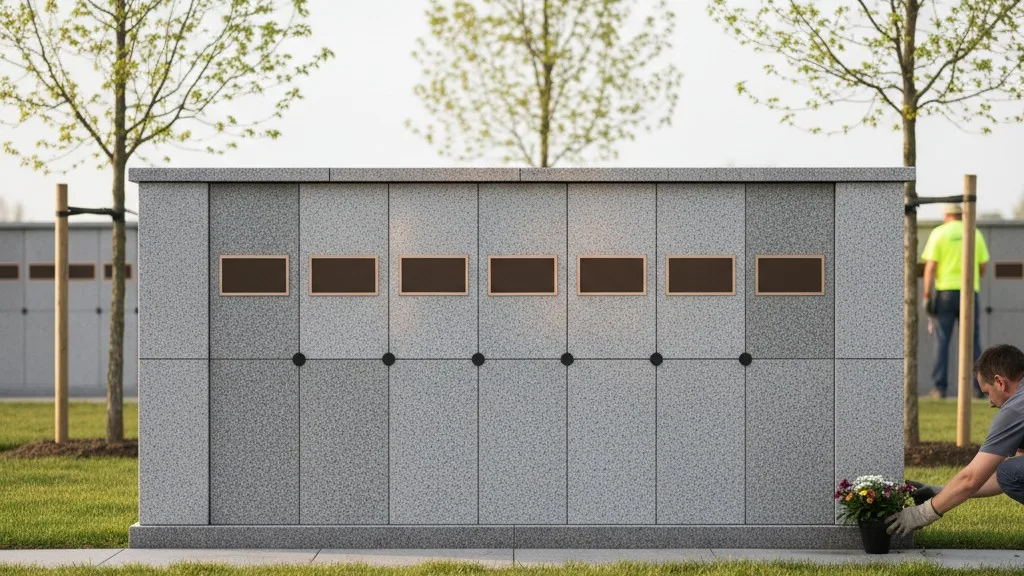
Work with a landscape architect who specializes in cemetery design. They can help you create a layout that feels serene and respectful while being practical for grounds maintenance and interment services. Key design considerations include:
- Variety of Inventory: Plan for a mix of burial options to meet diverse community preferences. This includes traditional ground burial plots, cremation niches, scattering gardens, family estates, and perhaps green burial sections.
- Infrastructure: Ensure roads and pathways are wide enough for maintenance equipment and funeral processions. Plan for adequate drainage to prevent water issues, and consider installing irrigation systems and water access for landscaping.
- Landscaping: Use trees, shrubs, and gardens to create a peaceful atmosphere, provide shade, and define different areas within the expansion. Choose hardy, low-maintenance plants appropriate for your climate.
Site preparation is the first step in construction. This involves clearing and grading the land, installing drainage and irrigation systems, and building roads and pathways. Once the groundwork is complete, you can begin installing features like columbarium walls or preparing sections for traditional burials. Throughout construction, ensure that your crews are respectful of any nearby graves and active services in the existing parts of the cemetery.
Integrating the New Section into Your Operations
The final step is to integrate the newly developed section into your cemetery's daily operations. This involves updating your records, training your staff, and beginning sales and marketing efforts for the new inventory. Flawless integration ensures a smooth transition for both your team and the families you serve.
First, update all your record-keeping systems. This is where having a centralized software solution is critical. In a system like Sunset, you can easily add a new section or subsection to your cemetery's digital map. You can then define the new spaces, set their prices, and mark them as available for sale. This process instantly makes the new inventory visible to your sales and administrative staff, preventing the confusion that comes from trying to manage new plots on a separate spreadsheet or paper map.
Next, train your staff on the new section. Your grounds crew needs to know the layout for maintenance and interments. Your sales counselors need to be familiar with the new inventory, its features, and pricing. Your administrative staff must understand how to process sales and manage deeds for the new plots. A well-informed team is essential for a successful launch.
Finally, begin marketing the new section. Announce the expansion to your community through your website, local newsletters, or partnerships with local funeral homes. Highlight the new burial options available and consider offering introductory pricing for pre-need sales to generate initial revenue. A successful expansion not only provides much-needed space but also signals your cemetery's commitment to serving the community for generations to come.
Frequently Asked Questions
How long does a cemetery expansion take?
A cemetery expansion is a long-term project. From initial planning and feasibility studies to final construction and integration, the entire process can easily take three to five years, or even longer. The most time-consuming phase is typically securing land and navigating the municipal zoning and permitting process, which can face delays and require public hearings.
What are the biggest risks in a cemetery expansion project?
The primary risks are financial and regulatory. Underestimating the total cost of development, from land acquisition and legal fees to infrastructure construction, can strain your budget. The second major risk is failing to get zoning approval. Opposition from the community or environmental regulations can stop a project completely, which is why a thorough feasibility study is so important.
Can I expand by adding cremation options instead of land?
Absolutely. If acquiring new land is not feasible, adding higher-density cremation options is an excellent way to expand your capacity. Building columbarium niches, creating a scattering garden, or offering in-ground cremation burials can add hundreds or thousands of new spaces within your existing footprint. This is often a faster and more affordable form of expansion.
How do I fund a cemetery expansion?
Funding for a cemetery expansion can come from several sources. These may include existing capital reserves, securing a commercial loan, or launching a pre-need sales campaign for plots in the new section to generate upfront revenue. A detailed financial plan and a strong business case are essential for securing any form of financing.
Does new land need to be consecrated?
For religious or denominational cemeteries, the consecration of new ground is an important religious rite. This is a distinct process from the legal and civil requirements for establishing a cemetery. If your cemetery has a religious affiliation, you will need to consult with your governing religious body to understand and perform the necessary ceremonies for the new land.
Plan Your Growth with Confidence
Expanding your cemetery is a testament to your commitment to the future. It’s a complex journey, but with careful planning, professional guidance, and diligent execution, you can successfully add capacity to serve your community for decades. The key is a methodical approach that starts with a deep understanding of your current inventory and ends with the seamless integration of the new grounds into your operations.
Having accurate, centralized data is the foundation of every stage of this process. If your records are scattered across paper files and spreadsheets, planning for the future can feel impossible. See how Sunset’s cemetery operations software provides a single source of truth for your spaces, ownership, and financials. Book a conversation with our team to learn how we can help you prepare for your cemetery's next chapter.