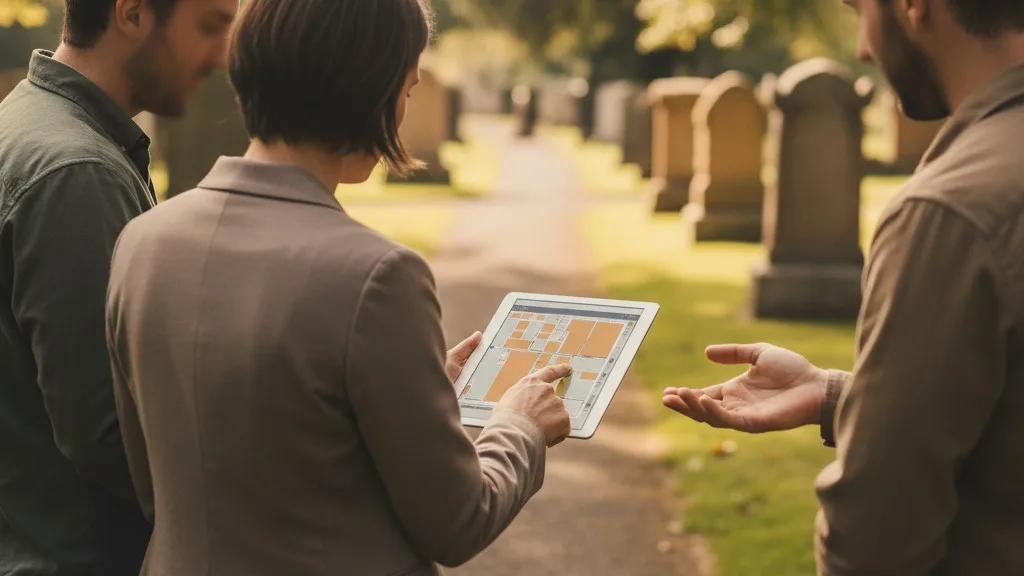
Using cemetery technology effectively means choosing tools that free your staff to spend more time with families, not less. The right technology automates administrative tasks and provides reliable information, which enhances the personal touch by allowing your team to be more present, compassionate, and accurate. This approach turns technology from a potential barrier into a powerful support for your core mission of serving the community.
Why Is There a Fear of Technology in Cemeteries?
The fear of technology in cemeteries often stems from a deep-seated commitment to tradition and the highly personal nature of the work. Many cemetery professionals worry that software and digital tools will create a cold, impersonal experience for grieving families. They are rightly concerned that focusing on screens could detract from the human connection and empathy that are central to their role. This is a valid concern; the goal is not to replace conversations with clicks, but to make those conversations more meaningful.
Another source of hesitation is the perceived complexity and disruption of adopting new systems. Cemetery staff are already managing heavy workloads, and the thought of a difficult transition, data migration, and extensive training can be overwhelming. There's also the fear of losing historical records or introducing errors into data that has been maintained on paper for generations. These are not trivial concerns, and they highlight the need for a thoughtful, phased approach to integrating any new cemetery technology.
Ultimately, the resistance is about protecting the cemetery's character and its sacred duty to families. The key is to reframe the role of technology: it isn't meant to replace the staff's compassion, but to handle the repetitive, administrative burdens that get in the way of it. When your team isn't searching for a lost deed or double-checking a plot location on a fragile map, they have more time and mental energy for the families standing in front of them.
How Technology Can Enhance Communication with Families
Technology can significantly enhance communication with families by providing them with clear, accurate, and timely information. When a family has a question about burial rights, payment history, or available spaces, a centralized software system allows your staff to find the answer in seconds, rather than minutes or hours. This immediate access to reliable data builds trust and demonstrates competence, reassuring families during a difficult time.
Consider the process of selling a plot. With a modern system, you can show a family available locations on a digital map, complete with photos and pricing, right from your office computer or a tablet in the field. This is a vast improvement over referencing a large, unwieldy paper map and cross-referencing it with a separate sales ledger. The entire process becomes more transparent and less stressful for the family. They can see exactly what they are purchasing and feel confident in their decision.
Technology also improves long-term communication. An online portal where families can view their ownership documents, make payments, or even see a photo of their loved one's memorial can be a profound source of comfort, especially for relatives who live far away. Email and text message notifications for upcoming payments or grounds maintenance schedules can also be a helpful, non-intrusive way to keep families informed. These tools don't replace phone calls or in-person meetings; they supplement them, providing convenient options that meet modern expectations.
Streamlining Internal Operations to Free Up Staff Time
Streamlining internal operations is where cemetery technology delivers its most immediate value, directly freeing up staff time for more personal service. The core benefit comes from creating a single source of truth for all cemetery data. When your sales records, interment logs, and groundskeeping tasks all live in one integrated system, the endless cycle of double-entry and cross-referencing disappears. This eliminates a huge source of administrative drag and potential for error.
Let's break down a common workflow: a burial service. In a disconnected system, this involves multiple phone calls, handwritten notes, and manual updates across different records. The office sells the interment right, takes the information, calls the grounds crew to mark the grave, and then manually updates a paper map, a lot card, and a financial ledger. Each step is a potential point of failure. You can learn more about how this can lead to mistakes in our guide to improving your cemetery operations workflow.
With integrated cemetery software, the process is streamlined and secure:
- Service Scheduling: The office schedules the interment in the system. This action automatically checks for ownership rights and any outstanding issues with the plot, preventing accidental errors.
- Work Orders: The system generates a digital work order for the grounds crew with the exact grave location, decedent information, and any special instructions. There are no transcription errors from a phone call.
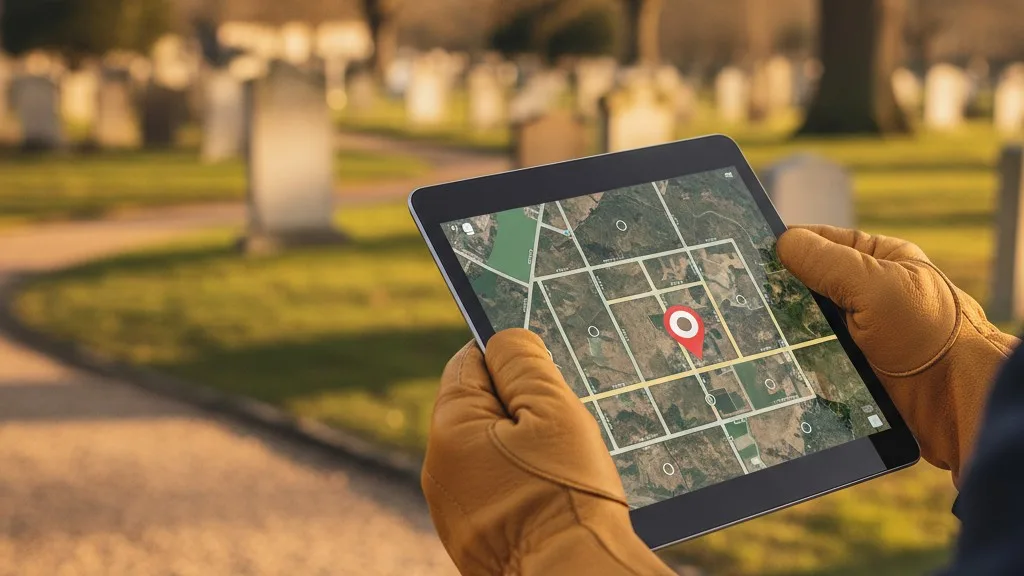
- GPS Navigation: The grounds crew can use a tablet with GPS mapping to navigate directly to the correct space, confirming their location with precision. This is especially valuable in large or complex sections.
- Completion and Record Update: Once the service is complete, the grounds crew marks the work order as done. The system automatically updates the official interment record, creating a permanent, searchable digital entry.
This automated workflow doesn't just save time; it builds a more resilient and reliable operation. Staff spend less time chasing paperwork and more time ensuring services are performed with dignity and care. The administrative work supports the human work, rather than competing with it.
Choosing the Right Technology for Your Cemetery
Choosing the right technology involves looking beyond a list of features and focusing on how a tool will solve your specific operational problems. Start by conducting a thorough assessment of your current workflows. Where are the bottlenecks? What tasks consume the most staff time? Are you struggling with outdated cemetery records, inefficient communication between the office and grounds, or a cumbersome sales process?
Once you've identified your pain points, you can evaluate software based on its ability to address them. Look for a system that is intuitive and designed for the way cemeteries actually work. A platform built by people with direct experience in cemetery management will understand the nuances of tracking perpetual care, managing ownership transfers, and coordinating interments. Avoid generic business software that has been awkwardly adapted for cemetery use.
Key areas to evaluate include:
- Core Record Management: How does the system handle spaces, ownership, interments, and deeds? Is it easy to search for a person and see all their associated records?
- Sales and Financials: Can the software manage contracts, generate invoices, and track payments? Does it integrate with your accounting software, like QuickBooks Online?
- Mapping and Operations: Does the platform include integrated, interactive maps? Can it generate work orders for your grounds crew and provide them with the information they need in the field?
- Ease of Use: Is the interface clean and easy to navigate? Will your staff be able to learn it quickly with proper training and support? The best software is useless if your team finds it too complicated to use.
Finally, consider the provider. Are they a partner who will help you with data migration, training, and ongoing support? Choose a company that sees you as a long-term relationship, not just a one-time sale. A good technology partner understands that their success is tied to yours and is invested in helping you serve your community better.
Training Your Staff to Be More Human, Not Less
Training your staff on new technology should focus on how the tools enable them to be more human, not how to become faster data-entry clerks. The goal of the training is not just to teach which buttons to click, but to instill confidence in the system so they can trust the information it provides and focus their attention back on the family. When a staff member knows the record on the screen is accurate, they can make eye contact, listen actively, and respond with empathy.
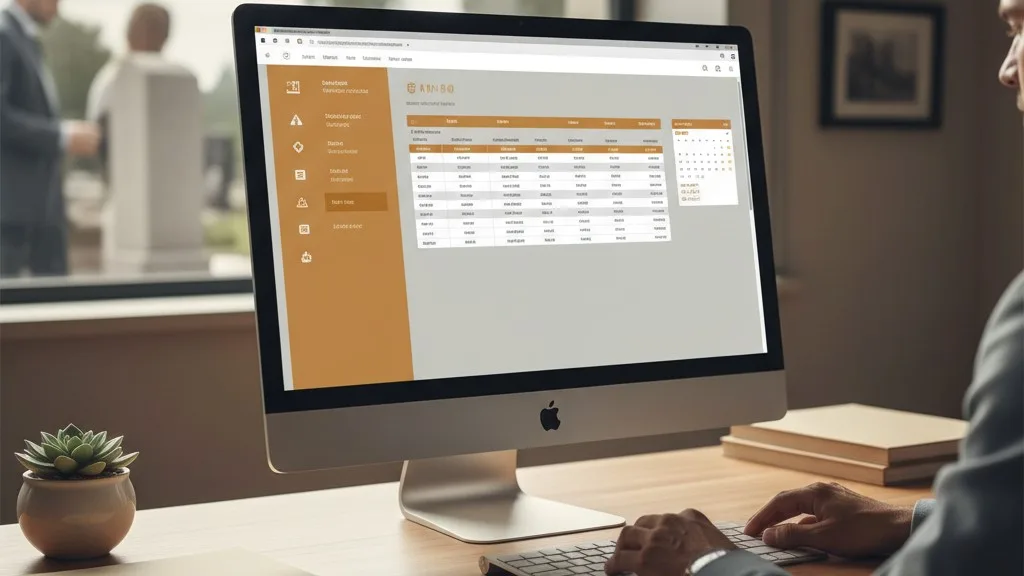
Start by framing the technology as a tool to eliminate their most frustrating tasks. Show them how the software solves the problem of searching through dusty binders for a 50-year-old deed or the anxiety of dispatching a crew to dig in the wrong location. When they see the technology as a solution to their daily headaches, they will be more receptive to learning it.
Effective training should be hands-on and role-specific. Your office administrator doesn't need to know the fine details of the GPS mapping tools, and your grounds superintendent doesn't need to master the contract generation module. Tailor the training to what each person needs to do their job better. Use real-world scenarios from your own cemetery to make the exercises relevant and practical.
Most importantly, follow up initial training with ongoing support and reinforcement. Encourage staff to ask questions and share feedback. Celebrate small wins, like the first time a complex ownership question is answered in seconds using the new system. Over time, this approach builds a culture where technology is seen not as an impersonal obstacle, but as a reliable assistant that helps everyone perform their duties with more grace, accuracy, and compassion.
Frequently Asked Questions
How do we get our older, less tech-savvy staff on board?
Engage them early in the process, listen to their concerns, and frame the technology as a solution to their specific frustrations. Focus training on the one or two features that will make their job easiest, and provide plenty of hands-on, patient support. When they see the tool as something that helps them avoid manual lookups or transcription errors, their perspective often shifts from resistance to acceptance.
Won't families feel like we're just treating them like a number in a database?
This is a common fear, but the opposite is usually true. When technology provides fast, accurate answers, families feel seen and respected. The frustration comes from waiting while staff search for misplaced files or provide conflicting information. Using a reliable system allows your team to be more present and confident, which makes the family feel more cared for, not less.
What's the most important first step in adopting cemetery technology?
The most important first step is a thorough audit of your existing records and processes. Before you can choose a software solution, you need a clear understanding of what problems you're trying to solve. Documenting your workflows, identifying bottlenecks, and assessing the state of your data will give you the criteria you need to select a tool that truly fits your cemetery's needs.
How can we afford new cemetery software?
While there is an initial investment, modern cloud-based software is often more affordable than you might think, especially when compared to the hidden costs of inefficient, paper-based systems. Consider the staff time lost to manual tasks, the financial risk of a misplaced record or a wrongful burial, and the opportunity cost of not being able to find and sell available inventory quickly. Often, the right software pays for itself through increased efficiency and accuracy.
Is our data safe in a cloud-based system?
Reputable cloud-based software providers use enterprise-grade security measures that are typically far more robust than what a single cemetery could maintain on-site. Your data is stored in secure data centers with multiple backups, encryption, and professional security monitoring. This is significantly safer than storing your cemetery's entire history on a single office computer or in a filing cabinet susceptible to fire, flood, or theft.
Technology That Serves People
The goal of integrating technology into your cemetery is not to automate human connection, but to create more opportunities for it. By streamlining administrative tasks, ensuring data accuracy, and improving internal communication, the right tools give your staff the most valuable resource of all: time. Time to listen, time to show compassion, and time to provide the personal, caring service that families will remember for years to come.
Sunset was built by cemetery people for cemetery people, designed to solve the real-world challenges of cemetery operations. If you're looking for a system that can support your staff and enhance your service to the community, we'd be happy to show you how it works. Book a conversation with us today.