
Relying on paper ledgers and spreadsheets creates significant hidden costs for your cemetery, affecting everything from daily operations to long-term financial stability. These outdated cemetery records introduce risks of lost sales, incorrect burials, and damage to your reputation that can take years to repair. Moving from paper to a centralized digital system is no longer just an upgrade—it's essential for managing these costs and ensuring your cemetery’s future.
What Are the True Costs of Outdated Cemetery Records?
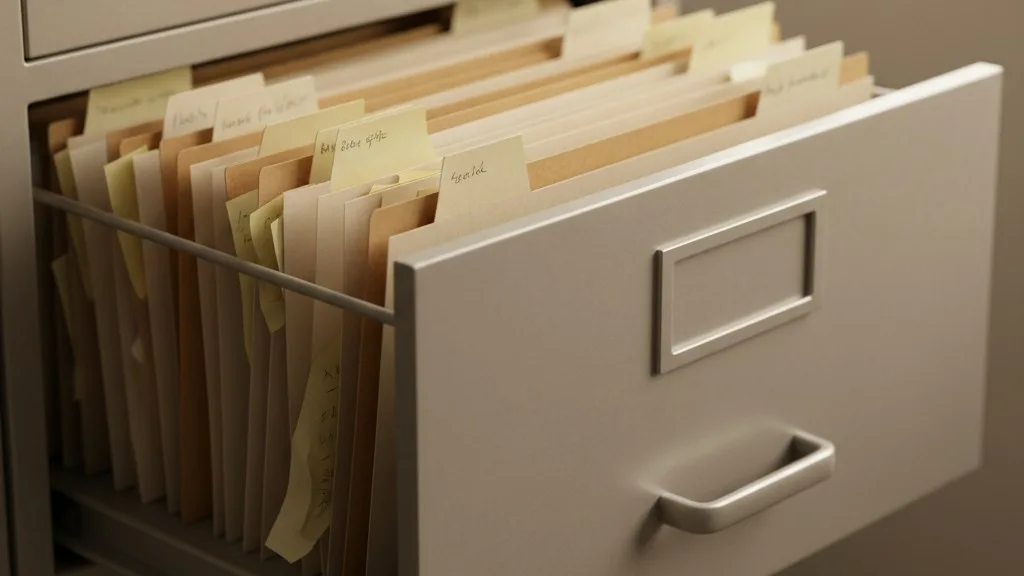
The true costs of outdated cemetery records extend far beyond the price of paper and filing cabinets. They manifest as operational inefficiencies, direct financial losses, and significant legal and reputational risks. When your staff has to piece together information from dusty ledgers, mismatched spreadsheets, and physical maps, they are losing time that could be spent serving families or maintaining the grounds.
These hidden costs accumulate daily. A simple question from a family about available plots can turn into a lengthy search, potentially leading to a lost sale. A misplaced deed can create a chain of ownership disputes. Every minute spent deciphering old handwriting or cross-referencing conflicting documents is a direct drain on your resources and a potential liability waiting to happen.
Operational Costs: The Daily Grind of Bad Data
Operational costs are the most immediate and visible consequence of relying on outdated records. These are the daily frictions and inefficiencies that slow down your staff and prevent your cemetery from running smoothly.

Wasted Staff Time
The single biggest operational cost is wasted staff time. When records are not centralized, every task takes longer. A staff member might need to pull a physical lot card, then find the corresponding map in a separate drawer, and finally check a spreadsheet on a computer to confirm payment status. This process of switching between systems is inherently inefficient and frustrating. This constant tool-switching also increases the chance of errors, as information can be easily missed or misinterpreted when moving between different formats. Read more about the hidden costs of switching tools in your cemetery office.
Delayed Sales and Lost Opportunities
When a family is considering a pre-need purchase, they need clear, confident answers about what is available. If your team cannot quickly show them available plots and provide accurate pricing, you risk losing their trust—and the sale. Outdated records make it difficult to get a clear view of your inventory. A plot marked as available in a ledger might have been sold years ago, with the update only recorded on a separate card that was misplaced. These delays and uncertainties create a poor experience for families and can directly impact your revenue.
Incorrect Burials and Costly Errors
The most serious operational risk is an incorrect burial. This can happen when outdated maps or conflicting records lead your grounds crew to the wrong location. The emotional and financial cost of disinterment and re-interment is immense, causing deep distress for the families involved and creating a significant legal and financial liability for the cemetery. Even smaller errors, like installing a monument on the wrong plot, can be expensive to fix and damage your relationship with lot owners.
Financial Costs: How Paper Records Drain Your Budget
While operational costs are about inefficiency, financial costs are about direct, measurable monetary losses. These costs are often harder to track because they are not line items on a budget, but they have a profound impact on your cemetery's financial health.
Lost Revenue from Unsold Inventory
If you don't know what you have, you can't sell it. Outdated records often contain “lost” inventory—plots that are available but are incorrectly marked as sold or are simply unaccounted for. A thorough cemetery records audit can often uncover significant amounts of sellable inventory, representing a direct source of new revenue. Without a reliable system, these assets remain hidden and unproductive, effectively shrinking your cemetery's capacity.
Difficulties with Financial Reporting and Audits
Accurate financial reporting is crucial for managing your cemetery's budget, securing loans, and managing perpetual care funds. When your sales and ownership data is scattered across paper records and disparate files, creating reliable financial reports becomes a monumental task. This makes it difficult to track revenue, manage accounts receivable, and comply with financial audits. It also complicates the management of perpetual care funds, which require meticulous tracking of contributions from each plot sale. Sunset, for example, allows for detailed tracking of invoices, payments, and payment plans, which can be synced with QuickBooks Online or exported for other accounting systems like Sage 50.
The High Cost of Data Recovery
Paper records are vulnerable to fire, flood, and simple decay. A single disaster could wipe out your cemetery's entire history, leaving you with an impossible task of reconstruction. While you might have backups, they are often just photocopies or scanned images that are not easily searchable. Digitizing records after a disaster is an expensive, time-consuming process. Proactively moving to a secure, cloud-based system is a far more cost-effective way to protect your most valuable asset: your data.
Reputational and Legal Risks
The most damaging costs are often the ones that are hardest to quantify. A cemetery's reputation is built on trust, and outdated records can erode that trust in profound ways, exposing you to significant legal challenges.
Erosion of Family and Community Trust
Families trust you to be the permanent steward of their loved ones' final resting places. When you can't find a record, provide a clear answer about ownership, or locate a grave, that trust is broken. Negative experiences travel quickly within a community, and a reputation for being disorganized or unreliable can be difficult to overcome. This can affect everything from at-need sales to your ability to attract pre-need contracts and community support for expansion projects.
Legal Disputes Over Ownership
Ownership disputes are one of the most common legal challenges for cemeteries. These often arise from unclear or conflicting records. A family may arrive with a deed for a plot that your records show belongs to someone else. Resolving these disputes can involve lengthy and expensive legal battles. A modern cemetery management system provides a clear, append-only history of ownership transfers, creating a definitive record that can prevent these disputes before they start. Sunset tracks current lot owners and maintains a complete, unchangeable transfer history for every space.
Compliance and Regulatory Issues
Cemeteries are subject to a variety of state and local regulations regarding burials, record-keeping, and financial management. Maintaining compliance is much harder with paper-based systems. Regulators may require reports that are difficult to generate from manual records, and audits can become stressful, disruptive events. Failure to meet these requirements can result in fines or other penalties. Always confirm your specific local and state requirements, as regulations can vary significantly.
Frequently Asked Questions
What's the first step to move away from paper records?
The first step is to conduct a comprehensive records audit. This involves gathering all of your existing records—ledgers, lot cards, maps, spreadsheets, and deeds—and systematically comparing them to identify and resolve inconsistencies. This process helps you create a single source of truth that will serve as the foundation for your new digital system.
Isn't digitizing our records too expensive and time-consuming?
While there is an upfront investment of time and resources, the long-term cost of not digitizing is far greater. The process can be managed in phases to make it more approachable. The goal is to stop the bleeding—to cease creating new paper records and begin entering all new information into a digital system immediately. You can then work backward to digitize historical records over time.
Our staff is used to the old system. How do we manage the change?
Change management is critical. The key is to involve your staff in the process, explain the benefits to them (less frustration, fewer errors), and provide thorough training. Modern software like Sunset is designed to be intuitive for cemetery staff, mirroring familiar workflows for managing spaces, ownership, and interments. When your team sees how much easier their jobs become, they are more likely to embrace the new system.
What should we look for in cemetery management software?
Look for a system built specifically for cemetery operations. It should handle your core needs: tracking spaces, ownership, and interments in a clear hierarchy. It should also manage deeds, contracts, and billing. A cloud-based system is preferable as it secures your data against physical disasters and allows for access from anywhere. Ensure the software is backed by a team that understands the unique challenges of cemetery management.
Overcoming the inertia of an old system is a challenge, but the cost of outdated cemetery records is too high to ignore. By investing in a modern, centralized system, you are not just buying software; you are securing your cemetery's operational efficiency, financial stability, and legacy of trust for generations to come.
See how Sunset centralizes your cemetery's records—from spaces and ownership to contracts and billing—in one place. Book a conversation with our team today.